The Suwannee River: A Paddler's Guide
A famous blackwater river that leaves the Okefenokee tannin-dark and finishes clear and spring-fed on its way to the Gulf. The Suwannee is a long, storied run of dark current, white sand, and clear springs.
The Suwannee begins at the edge of the Okefenokee Swamp in south Georgia and flows south and west across north Florida to the Gulf of Mexico. The upper river is tannin-dark and intimate; the lower river is fed by clear springs and lined with bright white sandbars. Expect alligators, multiple state parks and public landings for access, and both sandbar and designated-site camping. Spring and fall bring the best conditions; always check water levels and confirm access before you go.
Where it is
The Suwannee River starts where the Okefenokee Swamp drains its southern edge in Georgia, then swings south and west across north Florida before reaching the Gulf of Mexico. It is one of the best known rivers in the Southeast, a long blackwater journey that changes character dramatically from top to bottom.
Up high, near the swamp, the Suwannee is narrow, tannin-dark, and hemmed in by cypress and hardwood. As it descends, springs begin feeding cool, clear water into the channel, the river widens, and bright white sandbars appear along the banks. By the time it nears the coast it is a broad, slow river carrying the whole basin toward the Gulf. Plan by river reaches and time on the water, since the experience is very different on the upper, middle, and lower sections.
Access and put-ins
Public access to the Suwannee is relatively good compared with more remote blackwater rivers. Multiple state parks and public landings line the river, giving paddlers plenty of options for point-to-point trips of varying length. Many runs are set up between two landings, which means arranging a vehicle shuttle.
Because the river is so long, launch choices depend heavily on which section you want: the intimate upper river near the swamp, the spring-lined middle reaches, or the broad lower river toward the coast. Ramp names, conditions, and parking change over time, and some access sits inside parks with their own hours and fees. Confirm the specific landings you plan to use, their current condition, and shuttle logistics before your trip, and lean on state park and local outfitter information for up-to-date access.
Best time to paddle and water levels
What level can you run Big Shoals?
Fall through spring is the sweet spot on the Suwannee. Temperatures are mild, the bugs are lighter than in midsummer, and the sandbars on the lower river are pleasant for camping. Summer paddling is possible but hot, humid, and buggy, though the springs offer welcome cool-water stops.
Water level drives your plan, especially up high. The upper river near the Okefenokee needs enough flow to be comfortably runnable; in dry spells it can get shallow and slow. On the flip side, high water after heavy rain speeds the current, can submerge the white sandbars you were counting on for camp, and pushes debris into the channel. Check the nearest USGS or state river gauge before you launch and match your plan to what the water is actually doing that week, not to an average.
Alligators and safety
The Suwannee runs through classic gator country from the swamp all the way toward the coast, and alligators are a normal part of the ecosystem here. Most encounters are undramatic: a gator sliding off a warm bank into the water as you pass. Give them room, never feed or approach them, and keep pets and food secured in camp. Avoid swimming at dawn, dusk, and after dark, when alligators are most active, and be aware of them around springs and camp.
Day-to-day hazards depend on the reach. The upper river can hold strainers and deadfall, so scout blind corners and be ready to portage. The broad lower river brings motorboat traffic, wind, and larger open stretches. Wind and sun exposure grow as the river widens. Wear your PFD, carry more water than you think you need, tell someone your route and timeline, and plan for limited cell service in the remote sections.
Permits and rules
Rules on the Suwannee depend on who manages the land at any given spot. Paddling the river is generally open, but camping is another matter. The lower river offers white sandbar camping, and there are designated sites at state parks and river camps along its length, each with its own regulations and, in some cases, reservation requirements or fees.
Before you commit to a camp, confirm current regulations with the managing agency, respect posted signs, and never assume a sandbar or site is open just because it looks empty. Springs along the river may sit on public or private land with their own access rules. A fishing license is required for anglers, and Florida and Georgia rules differ, so check which applies where you are. Above all, practice Leave No Trace: pack out everything, use existing sites, and leave the river cleaner than you found it.
Our trips on the Suwannee
We have documented our own runs on the Suwannee. Watch the expeditions to see the real conditions: the dark upper river, the clear springs, the white sandbar camps, and the water as it actually is.
Field notes from the Suwannee
Every trip we have filmed on this river, written up: what the water was doing, where we camped, and what we would do differently.
- We Missed Outdoor Boys… So I Took My Grandsons Canoe Camping
- Eating Sardines While 3 Gators Watched
- Relaxing River ASMR — No Talking
- High Water and a New Puppy
- A 13 Foot Gator Blocked the Only Way Through
- Limestone, a Waterfall, and a Full Moon
- Gators Everywhere and a Camera Lost
- Found a Gator Problem
- A Jar of Boiled Peanuts at the Suwannee Sill
Go deeper
River levels
The USGS gauge for every river we paddle, and what the reading actually means for a loaded canoe.
The Canoe Camping Playbook
Our step-by-step course on planning, packing, and running multi-day blackwater canoe trips. Everything behind an expedition like the Suwannee.
Camping Wilderness Skills
The community, courses, and app behind every trip we run. Trade notes with other paddlers who run these rivers. A hobby community on Skool.
Suwannee expedition films
See the dark upper river, clear springs, and sandbar camps in the films we made on this river.
Trips, unpacked
Browse the Field Notes for the decisions, gear, and lessons behind real blackwater trips.
Free Paddler's Guide
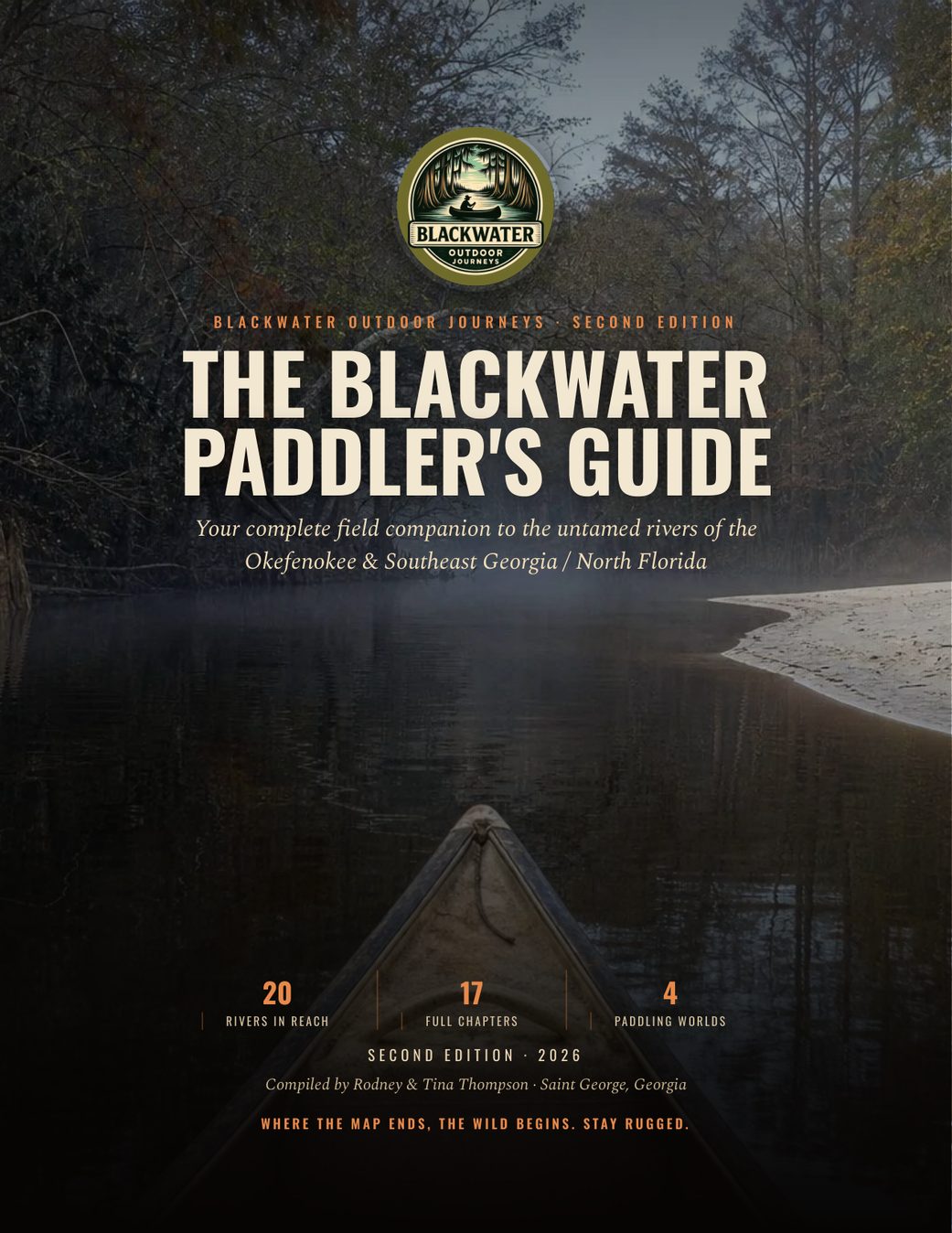
Get the complete river-planning guide for the Okefenokee and Southeast Georgia waters.
Plan the trip: Suwannee River 2-Day Canoe Trip: Fargo to Big Shoals, 26 Miles. Day by day, with food, water, gauge and permit notes.
Rivers Nearby
Okefenokee
Cypress labyrinth, high water, total isolation.
GA-FL lineSt. Marys
Dark, tidal, winding. The border nobody maps right.
Wild & tightSatilla
Downed trees, portages, camps you earn.
Georgia's widestAltamaha
Big water, tiny islands, the river nobody films.
Spring-fed & clearWithlacoochee
Blackwater that turns clear as glass over the springs.
Sinks & risesAlapaha
Blackwater that vanishes underground, then rises again.
Frequently asked questions
Where is the Suwannee River?
The Suwannee begins where the Okefenokee Swamp drains its southern edge in south Georgia, then flows south and west across north Florida before reaching the Gulf of Mexico. It is one of the best known rivers in the Southeast, and a long blackwater journey that changes character dramatically from top to bottom. Near the swamp, the river runs narrow, tannin-dark, and hemmed in by cypress and hardwood, giving the upper reaches an intimate feel. Moving downstream, springs begin feeding cool, clear water into the channel, the river widens, and bright white sandbars start showing up along the banks. By the time the Suwannee nears the coast, it has become a broad, slow river carrying the whole basin toward the Gulf. Because the character shifts so much along its length, it helps to think of the Suwannee in reaches, upper, middle, and lower, and to plan a trip and the time you set aside around whichever section you intend to paddle.
When is the best time to paddle the Suwannee?
Fall through spring is the sweet spot on the Suwannee, with milder temperatures, lighter bug pressure than midsummer, and pleasant sandbar camping on the lower river. Summer paddling is possible, but expect heat, humidity, and more bugs, though the springs offer a welcome cool-water break when the air gets thick. Water level matters just as much as the calendar, especially on the upper river near the Okefenokee, which needs enough flow to be comfortably runnable and can turn shallow and slow during dry spells. High water after heavy rain cuts the other way: it speeds up the current, can submerge the white sandbars you were counting on for camp, and pushes debris into the channel. Because conditions swing so much with rainfall, check the nearest USGS or state river gauge before you launch, and plan around what the water is actually doing that week rather than a seasonal average.
Are there alligators in the Suwannee River?
Yes. The Suwannee runs through classic gator country for its entire length, from the tannin-dark water near the swamp down through the spring-fed lower river toward the coast, and alligators are simply a normal part of this ecosystem. Most encounters are undramatic, typically just a gator sliding off a warm bank into the water as you paddle past. The safety guidance is straightforward: give alligators plenty of room, never feed or approach them, and keep pets and food secured in camp so nothing draws them in closer than they would come on their own. Avoid swimming at dawn, dusk, and after dark, since alligators are most active during those hours, and stay just as aware of them around springs and campsites as on the open river. Treating alligators as an expected part of the landscape, rather than a surprise, is the simplest way to paddle and camp comfortably alongside them.
Where can I camp along the Suwannee?
The Suwannee offers two main styles of camping. On the lower river, paddlers can camp on the bright white sandbars that line the banks once the springs start feeding in and the channel widens; higher up, near the swamp, the river is narrower and those sandbars have not appeared yet. Along the river's length there are also designated sites at state parks and river camps, which give a more structured option than picking a sandbar for the night. Camping is treated differently than paddling itself: the river is generally open to run, but camping rules, reservations, and fees vary by site and by whichever agency or park manages that stretch of land. Never assume a sandbar or site is open to use just because it looks empty, and always confirm current camping options, regulations, and any required reservations with the managing agency before your trip. Practice Leave No Trace everywhere you camp, pack out everything, use existing sites, and leave the river cleaner than you found it.
Are the springs worth stopping for?
Yes. The lower Suwannee is fed by numerous springs that pour clear, cool water into the otherwise tannin-dark river, and this is one of the things that sets the lower river apart from the narrow, cypress-lined water up near the Okefenokee. Many of these springs are popular stops for swimming and rest, and in the heat of summer paddling season they offer a genuinely welcome cool-water break from the humidity and bugs. That said, springs are not uniform in how they are managed. Access and rules differ from one spring to the next, since a given spring may sit on public or private land with its own regulations, and some may not be open or accessible to the public at all. Before you plan a stop around a particular spring, check whether it is currently open, whether public access is allowed, and what rules apply there. It is also worth staying alert for alligators around springs, the same as anywhere else along the river.